Running a virtual office sounds simple on the surface. No commute, fewer overheads, and teams spread across locations working digitally. But behind that flexibility sits a complex system of coordination, communication, and control that can easily break down without the right support.
This is where a remote office administrator becomes essential. They are not just handling emails or scheduling meetings. They act as the operational backbone of a distributed team, ensuring that workflows remain consistent, communication stays clear, and nothing slips through the cracks. Without skilled administrative support, even well-funded virtual teams can lose efficiency quickly.
The Hidden Complexity Of Virtual Office Operations
Virtual offices remove physical barriers, but they introduce new operational challenges. Teams rely on multiple tools, time zones overlap imperfectly, and informal communication disappears.
A skilled admin understands how to create order within this complexity. They standardize processes, maintain documentation, and ensure that every team member knows where to find information and how to act on it. Without that structure, teams spend more time searching, clarifying, and fixing avoidable mistakes.
They also act as a central coordination point. In a physical office, quick clarifications happen naturally. In a virtual setup, those same clarifications require intentional systems. A capable admin builds those systems so communication flows without friction.
Core Responsibilities Of A Remote Office Administrator
A remote office administrator wears multiple hats, often switching between operational, technical, and coordination roles throughout the day.
Daily Operational Tasks That Keep Teams Running
These are the foundational tasks that prevent chaos and ensure continuity across departments.
– Managing calendars across time zones to avoid scheduling conflicts
– Coordinating meetings, agendas, and follow-ups
– Organizing shared documents and maintaining version control
– Handling internal communications and announcements
– Tracking tasks and ensuring deadlines are met
These daily actions create a stable operating environment where teams can focus on their actual work.
Strategic Contributions Beyond Basic Admin Work
Experienced admins go beyond task execution and actively improve how the business operates.
– Identifying inefficiencies in workflows and suggesting improvements
– Implementing better tools or optimizing existing systems
– Creating standard operating procedures for repeat tasks
– Monitoring team productivity patterns and reporting insights
– Supporting leadership with data and coordination
This level of involvement turns an admin into a strategic asset rather than a support role.
Why Skill Level Matters More In Virtual Setups
In a traditional office, small inefficiencies are often absorbed naturally. In a virtual environment, those inefficiencies multiply quickly.
A skilled admin anticipates problems before they escalate. For example, they recognize when communication gaps are forming or when a process is becoming too complex. Instead of reacting late, they intervene early with structure and clarity.
They also bring digital fluency. Virtual offices rely heavily on tools like project management platforms, communication apps, and cloud storage systems. An unskilled admin may use these tools passively, while a skilled one configures them to actively support team performance.
Key Skills That Define An Effective Virtual Admin
Not every admin can thrive in a virtual environment. The role demands a specific combination of technical, organizational, and interpersonal skills.
Must-Have Skills For Virtual Office Efficiency
These skills directly impact how smoothly a virtual office operates.
– Strong written communication to replace in-person clarity
– Advanced organization for managing distributed workflows
– Time management across multiple priorities and time zones
– Tech proficiency with collaboration and automation tools
– Problem-solving without constant supervision
These capabilities allow admins to operate independently while keeping the team aligned.
Soft Skills That Make A Measurable Difference
Technical skills alone are not enough. Human dynamics still drive team performance.
– Proactive mindset to anticipate needs before being asked
– Adaptability in fast-changing environments
– Attention to detail in documentation and communication
– Emotional intelligence to manage remote team interactions
– Accountability for outcomes, not just tasks
These qualities help admins maintain consistency even when conditions shift.
Common Mistakes Businesses Make Without Skilled Admin Support
Many organizations underestimate the importance of administrative roles in virtual environments. This often leads to avoidable operational issues.
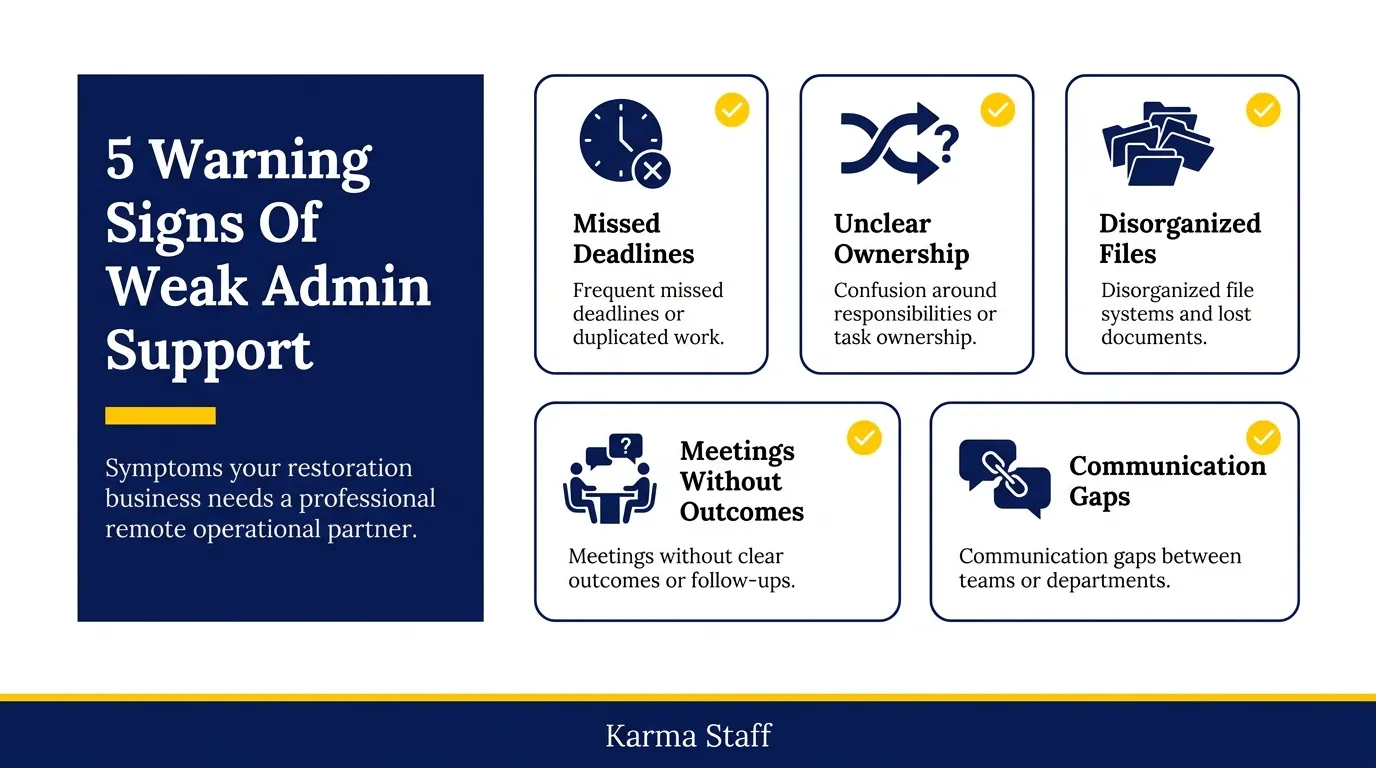
Warning Signs Of Weak Administrative Support
These signs usually appear early but are often ignored until they impact performance.
– Frequent missed deadlines or duplicated work
– Confusion around responsibilities or task ownership
– Disorganized file systems and lost documents
– Meetings without clear outcomes or follow-ups
– Communication gaps between teams or departments
These issues compound over time and reduce overall efficiency.
Consequences Of Poor Virtual Coordination
Ignoring these warning signs creates deeper structural problems.
– Reduced team productivity due to constant clarification needs
– Increased stress across team members
– Delayed decision-making and slower project execution
– Higher risk of errors in critical tasks
– Leadership losing visibility into operations
Addressing these issues early with skilled admin support prevents long-term disruption.
How Skilled Admins Improve Team Productivity
Productivity in a virtual office depends heavily on clarity and consistency. Skilled admins create both.
They ensure that every process has a defined structure. Tasks are documented, responsibilities are clear, and deadlines are visible. This reduces the need for repeated explanations and allows team members to work independently.
They also reduce cognitive load. Instead of juggling multiple tools and unclear priorities, team members operate within a streamlined system. This frees up mental bandwidth for meaningful work.
Another key contribution is accountability. A skilled admin tracks progress, follows up on tasks, and ensures commitments are met. This creates a culture where work moves forward without constant supervision.
The Role Of Technology In Supporting Virtual Admin Work
Technology is the backbone of virtual office operations, but it only works well when managed properly.
A skilled admin does more than use tools. They design systems around them. For example, instead of simply using a project management tool, they define workflows, naming conventions, and task structures that make the tool effective.
They also evaluate tools critically. Not every platform adds value. A skilled admin identifies redundancies and removes unnecessary complexity, keeping the tech stack lean and efficient.
Automation is another key area. Routine tasks such as reminders, reporting, and data updates can be automated, saving time and reducing human error. Skilled admins know where automation helps and where human oversight is still needed.
How To Choose The Right Remote Office Administrator
Hiring the right admin is not just about experience. It is about fit for a virtual environment.
Practical Steps To Identify Strong Candidates
A structured approach helps filter out candidates who may struggle in remote roles.
– Assess real-world problem-solving through scenario-based questions
– Test familiarity with tools your team already uses
– Evaluate written communication through sample tasks
– Ask for examples of process improvements they have implemented
– Check references for reliability and independence
These steps reveal how candidates perform beyond their resumes.
Red Flags To Watch During Hiring
Certain behaviors indicate a candidate may not thrive in a virtual setup.
– Reliance on constant supervision or direction
– Limited experience with digital tools
– Vague answers about past responsibilities
– Poor written communication clarity
– Lack of initiative in previous roles
Spotting these early helps avoid costly hiring mistakes.
Conclusion
Virtual offices promise flexibility and efficiency, but those benefits depend heavily on how well operations are managed. Skilled administrative support transforms scattered systems into structured workflows, enabling teams to perform consistently without unnecessary friction.
As virtual office management continues to evolve, the role of a capable admin becomes even more critical. Investing in the right talent is not just about support. It is about building a reliable operational foundation that allows the entire business to grow with confidence.
If your team is experiencing coordination issues or inefficiencies, it may be time to evaluate whether you have the right administrative support in place.
FAQs
Q: What does a remote office administrator do daily?
A: They manage schedules, coordinate communication, organize documents, track tasks, and ensure workflows run smoothly across distributed teams.
Q: Why is a skilled admin more important in virtual offices than physical ones?
A: Virtual offices lack informal coordination, so admins must create structured systems to replace spontaneous communication and prevent confusion.
Q: Can small businesses benefit from hiring a virtual admin?
A: Yes, even small teams gain efficiency, better organization, and clearer workflows with a skilled admin, which supports growth without adding complexity.
related news & insights.

Clear communication keeps daily office operations moving. An administrator often sits at the center of schedules, messages, meetings, visitors, records, and urgent requests. That position creates a valuable opportunity to prevent confusion before it affects deadlines, customer service, or team morale. Strong communication is not
-
Introduction Property restoration work moves quickly. A team may be handling water extraction, documenting fire damage, coordinating vendors, and responding to anxious property owners within the same day. Field crews need to focus on stabilizing the site and completing approved work. Without someone managing the