Your books are current enough to show what happened last month, but your tax advisor is still asking for missing documents, unclear expense notes, and answers nobody has written down. The fix is not more email threads. It is a clear division of work, a regular review rhythm, and one shared process for questions that affect the records. This guide explains what belongs with the bookkeeper, what needs CPA review, and how to keep the handoff from becoming a last-minute scramble.
Build one working record before questions reach the CPA
The practical answer is to give the CPA a complete, organized set of records with the open questions clearly separated from the finished work.
Remote work often breaks down because every document, message, and correction arrives through a different channel. A bookkeeper may have reconciled the bank activity, entered bills, and categorized routine expenses, while the CPA receives a folder of receipts without context. That puts the advisor in the position of sorting records instead of reviewing them.
Bookkeepers and CPAs work more effectively when the bookkeeper prepares the file in the same order every time. The CPA should be able to see the current reports, supporting documents, unresolved items, and notes about unusual activity without having to search through several inboxes.
A useful working record usually includes:
- Current bank and card reconciliations with any differences noted.
- A list of uncategorized or unusual transactions needing a decision.
- Supporting documents for major purchases, loans, and owner activity.
- Notes explaining corrections made since the prior review.
- A short list of questions that need tax or accounting judgment.
The bookkeeper does not need to solve every question before sharing it. The goal is to make uncertainty visible early, with enough context for the CPA to respond. That gives the advisor a cleaner starting point and prevents the same issue from being discussed repeatedly.
Separate routine bookkeeping from professional judgment
The handoff works when routine recordkeeping stays with the bookkeeper and decisions with tax consequences are clearly marked for the CPA.
A remote bookkeeper can maintain the day-to-day record: entering transactions, matching payments, tracking bills, reconciling accounts, and keeping documents connected to the right activity. That work creates the base the CPA needs. It should be consistent, timely, and easy to review.
The CPA’s role is different. Tax treatment, reporting choices, entity questions, and judgments about how a transaction should be handled may require professional review. The bookkeeper should not guess when a transaction does not fit the normal pattern, even if the amount seems small.
The clearest teams use a simple rule: routine work moves forward; exceptions stop for review. An exception might include a new loan, an owner payment, a large asset purchase, a refund that does not match the original charge, or money received before work is complete.
This separation protects both sides. The bookkeeper is not expected to make a call outside the agreed process, and the CPA is not left discovering major changes after the records have already been finalized. It also gives the business owner a clearer answer when they ask who needs to decide something.
Questions need context, not just a transaction name
A question sent to a CPA should explain what happened, what documents are available, and what decision is needed.
“Please review this charge” creates another round of questions. “This payment relates to equipment purchased for a new service line; the invoice and financing paperwork are attached” gives the CPA a usable starting point. The difference is not accounting knowledge. It is the discipline of recording the business reason while someone still remembers it.
Set a review rhythm that matches the business
A regular review schedule keeps small issues from turning into a pile of unanswered decisions at filing time.
The right rhythm depends on how much activity the business has and how often the owner needs financial information. Some teams need frequent check-ins because cash movement, payroll activity, or project costs change quickly. Others can work from a monthly close process, with a separate review when something unusual occurs.
The important part is that the timing is agreed in advance. The bookkeeper needs to know when records must be ready. The CPA needs to know when questions will be collected and how much time is available for review. The owner needs to know when they can rely on reports for decisions.
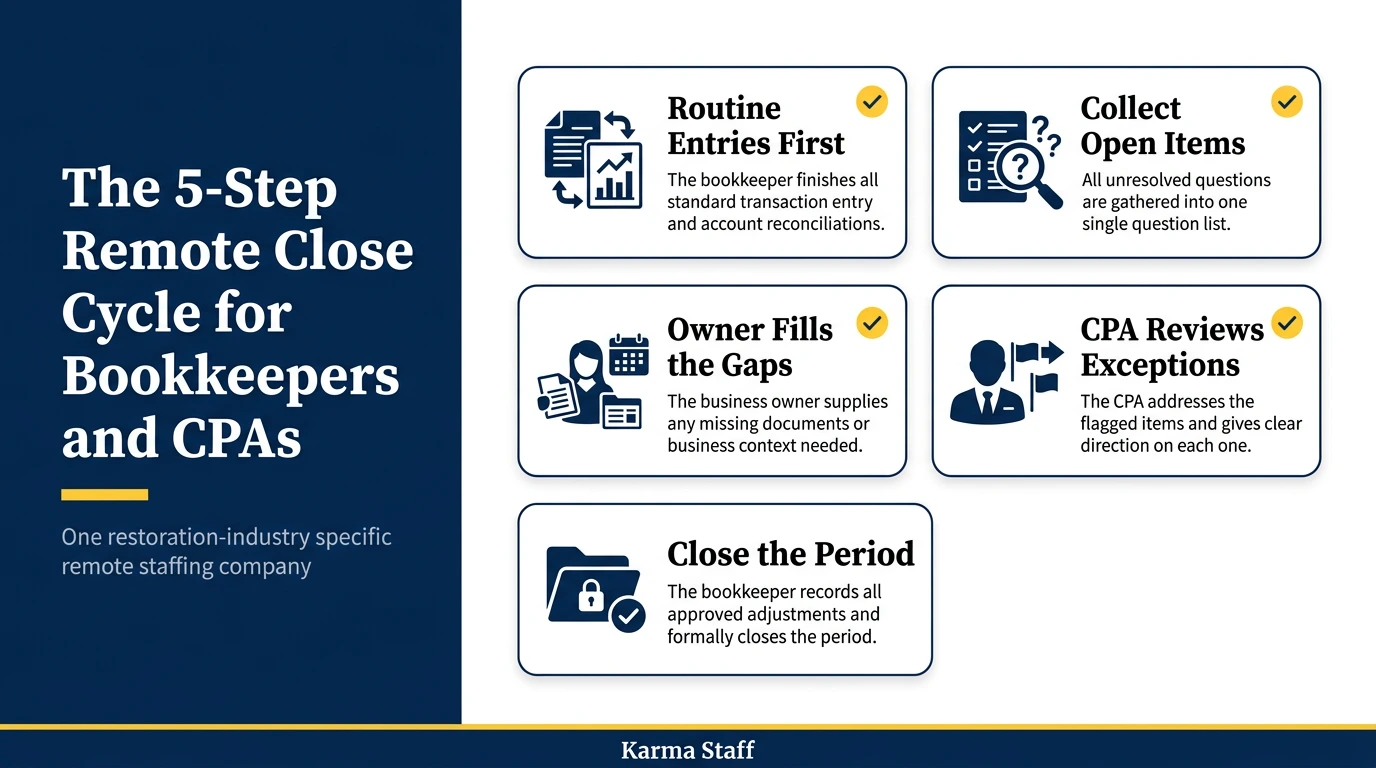
A workable cycle often follows this order:
- The bookkeeper finishes the routine entries and reconciliations.
- Open items are collected in one question list.
- The owner supplies missing documents or business context.
- The CPA reviews the exceptions and gives direction.
- The bookkeeper records approved adjustments and closes the period.
Do not turn every small question into an urgent meeting. At the same time, do not hold unusual items until the next scheduled review if they affect a current decision. A new obligation, a major purchase, or a change in how the business is operating may need prompt input.
Give the virtual tax advisor one place to respond
Virtual tax advisor collaboration is strongest when questions, decisions, and follow-up work are recorded in one shared location.
Email is useful for notifications, but it is a poor long-term record of accounting decisions. Messages get buried, people reply to only part of a thread, and nobody can easily tell whether a question was resolved. A shared question log, task list, or review folder gives the team a visible record of what is waiting, who owns it, and what was decided.
Each item should have a short description, the related period, the documents needed, and the current owner. Once the CPA responds, the bookkeeper can record the adjustment or note why no change was needed. This creates a useful trail for the next review.
Access also needs to match the role. The bookkeeper may need access to the accounting records and routine source documents. The CPA may need the same records plus reports and question logs. The owner should decide who can approve changes, see sensitive information, and invite additional users.
Remote work does not require everyone to be available at every moment. It does require a clear place to leave a question and confidence that the next person can understand it without starting from zero.
Catch the failures that create rework
Most collaboration problems come from unclear ownership, missing context, or corrections that never make it back into the records.
One common failure is treating the CPA as the cleanup person for every unfinished task. That delays review work and makes it harder to see which issues actually need professional judgment. Another is closing a month without checking whether the open-question list has been answered. The reports may look complete while important classifications remain unsettled.
A third problem is giving an answer verbally, then never documenting it. If the bookkeeper does not record the decision and update the file, the same question can return months later. The owner may then receive conflicting explanations from people who are both working from incomplete information.
A better approach is to make every exception end in one of three places: a documented adjustment, a documented decision that no adjustment is needed, or a clearly assigned next action. Nothing should remain in the middle because nobody knows who is waiting.
This process also helps when responsibilities change. A new bookkeeper or advisor can review the records and see how prior questions were handled instead of rebuilding the history from memory.
A bookkeeper, a CPA, and a tax advisor compared
| Role | Main focus | Owns routine entries | Handles judgment calls |
| Bookkeeper | Current records | Yes | Flags exceptions |
| CPA | Review and reporting | Sometimes | Yes |
| Tax advisor | Tax planning questions | No | Yes |
| Business owner | Business context | Approves information | Makes business choices |
Conclusion
If your records are mostly current but questions keep piling up, start by creating one clear question list and assigning routine work to the bookkeeper. If the business has unusual transactions or decisions that could affect reporting, bring the CPA in before the records are treated as final. Bookkeepers and CPAs usually work well together when each person can see what is finished, what is uncertain, and who must decide next.
Virtual tax advisor collaboration is most useful when it is built into the regular close process rather than saved for a rushed filing period. Start with a repeatable file, a review rhythm, and written decisions that the next person can follow. Confirm that any accounting or tax process fits the needs of your business and the professional responsible for its review.
FAQs
Q: Can a remote bookkeeper communicate directly with my CPA?
A: Yes, if the business owner sets clear permissions and agrees on how questions will be shared. Direct communication can reduce delays because the bookkeeper can provide transaction details and documents while the CPA explains what needs to change. The owner should still remain informed about decisions that affect the business, reporting, or future tax planning.
Q: What should a bookkeeper ask a CPA before the year-end review?
A: The bookkeeper should identify unresolved items rather than trying to predict every tax question. Useful topics include unusual purchases, new debt, owner transactions, missing documents, and changes in how income or expenses were recorded. A complete list gives the CPA time to review the issues in context instead of finding them while preparing final work.
Q: How do I prevent duplicate work between a bookkeeper and tax advisor?
A: Assign one person to each task and keep the status visible. The bookkeeper can prepare records and supporting documents, while the advisor reviews exceptions and provides direction.
related news & insights.

A capable bookkeeper can still struggle when receipts arrive late, approvals are unclear, and nobody can answer questions. But a good process cannot make up for missing bookkeeping skills either. Before hiring, check how the person handles reconciliations, incomplete records, and job-related costs. Then give
-
Accurate books give business owners a clear view of cash flow, margins, tax obligations, and available funds. A remote provider can reduce administrative work while giving you access to skilled bookkeeping support without hiring a full internal finance team. The right partner does more than