Accurate books give business owners a clear view of cash flow, margins, tax obligations, and available funds. A remote provider can reduce administrative work while giving you access to skilled bookkeeping support without hiring a full internal finance team.
The right partner does more than categorize transactions. They maintain clean records, identify unusual activity, deliver useful reports, and keep your financial information organized for your accountant. Before selecting a provider, define what your business needs each month and how much support your team can provide.
Define Your Bookkeeping Scope Before Comparing Providers
Start by listing the financial tasks that currently consume time or create errors. A restoration company may need bookkeeping support that understands job-level expenses, subcontractor payments, equipment purchases, insurance receivables, customer deposits, and AR tied to open restoration jobs.
Your scope may include transaction categorization, bank reconciliations, accounts payable, invoicing, payroll coordination, sales tax tracking, inventory reporting, or monthly financial statements. Ask each provider which tasks are included and which require an added fee.
The best remote bookkeeping company will explain its service boundaries clearly. Vague promises of full service bookkeeping often lead to missed expectations after onboarding.
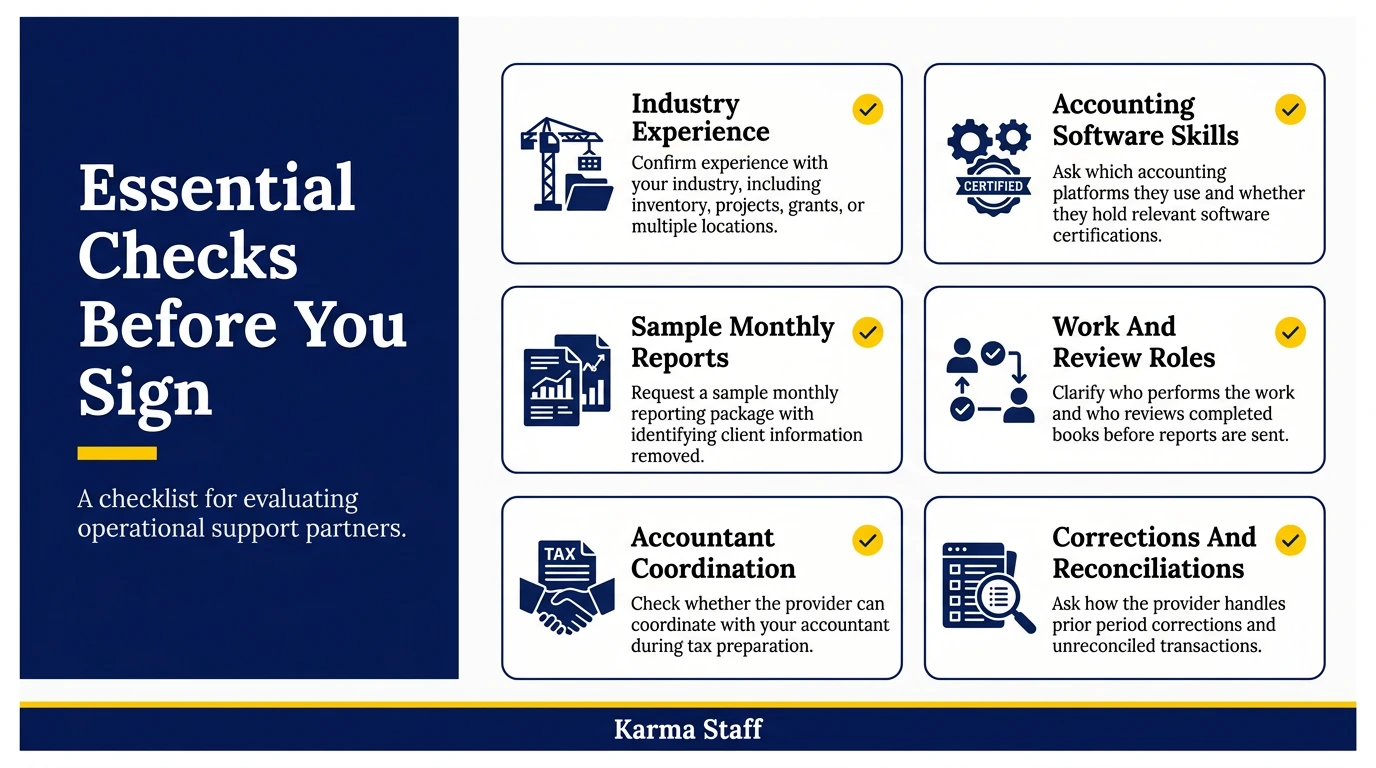
Essential Checks Before You Sign
A provider should have the skills, processes, and access controls needed to manage your records accurately. Verify these details before sharing financial logins or historical data.
– Confirm experience with your industry, especially if you manage inventory, projects, grants, or multiple locations
– Ask which accounting platforms the team uses and whether they hold relevant software certifications
– Request a sample monthly reporting package with identifying client information removed
– Clarify who performs the work and who reviews the completed books before reports are sent
– Check whether the provider can coordinate with your accountant during tax preparation
– Ask how the provider handles prior period corrections and unreconciled transactions
These checks reveal whether a provider has a repeatable process rather than a general administrative service.
Evaluate The Quality Of Monthly Reporting
Bookkeeping has limited value if the reports arrive late or contain numbers you cannot trust. Ask prospective providers when they close the books each month and what information they need from you to meet that deadline.
A useful monthly package usually includes a profit and loss statement, balance sheet, cash flow summary, accounts receivable aging, and a short explanation of major changes. A service business may also need revenue by client or project. A product-based business may need inventory and gross margin reporting.
Review whether the provider can tailor reports to your management decisions. A business owner planning to hire staff needs labor cost visibility. An owner seeking financing needs accurate historical statements and clean supporting records.
Ask About Exception Reporting
Good bookkeepers do not simply process transactions. They flag items that require an owner decision, such as duplicate charges, unusually high vendor payments, missing receipts, negative inventory balances, or overdue invoices.
Ask how the team communicates these issues and how quickly it expects a response. A clear exception process prevents unresolved items from accumulating for months.
Pricing Models Compared
Remote bookkeeping pricing should reflect the complexity of your records, transaction volume, reporting needs, and cleanup work.
- Fixed monthly pricing works well when transaction volume is predictable.
- Tiered packages can scale as the business grows.
- Hourly pricing may suit one-time cleanup or catch-up work.
- Setup fees are reasonable when historical books need cleanup or migration.
- Extra charges should be clear for services such as payroll coordination, sales tax, bill pay, or rush reporting.
Choose a pricing model that makes the scope easy to understand and budget for each month.
Review Security And Data Access Practices
A remote bookkeeping provider will need access to sensitive bank, payroll, payment processor, and accounting data. Security should be part of the selection process, not an afterthought.
Ask whether the provider uses multi-factor authentication, password management software, encrypted file sharing, and role-based user access. Your bookkeeper should not need your personal bank login if the bank allows accountant or view-only access.
Confirm who owns the accounting file and how you can retrieve it if the relationship ends. You should retain administrator access to the accounting platform, cloud storage folders, and major financial applications. This protects continuity if you change providers or need immediate access for a lender or tax professional.
Warning Signs During The Sales Process
Early conversations often reveal how a provider will operate after onboarding. Pay attention to the clarity of answers, the quality of questions, and the level of financial understanding shown.
– The provider gives a price without asking about transaction volume, software, payroll, or reporting needs
– No one can explain the month-end close process or the expected delivery date for reports
– The provider promises tax advice without discussing coordination with a qualified tax professional
– Security questions receive vague answers or the provider requests personal banking credentials
– The proposal does not identify deliverables, response times, responsibilities, or extra fees
– The provider avoids discussing who will work on your account and who will review the work
These signs often point to inconsistent service and avoidable problems later.
Set Communication Expectations From The Start
Remote bookkeeping works best when both sides know who handles receipts, approvals, transaction questions, and monthly report reviews.
Confirm how communication will happen, whether through email, a client portal, scheduled calls, or task software. Set a normal response window for routine questions and a separate process for urgent issues.
A short monthly review can also help explain unusual transactions, new contracts, or changes in staffing before they affect reporting.
Run A Focused Onboarding Process
Onboarding should begin with a review of the existing books. The provider should identify unreconciled accounts, uncategorized transactions, duplicate entries, and reporting gaps before regular monthly work begins.
Provide the records and system access needed to establish an accurate starting point, including prior financial statements, bank access, payroll information, and key contacts.
Set a clear date for completing any cleanup work and delivering the first reliable monthly close.
Conclusion
Choosing a remote bookkeeping partner requires more than comparing monthly prices. The strongest choice has relevant experience, secure systems, clear deliverables, reliable reporting, and communication that fits your operating rhythm.
Professional bookkeeping support should leave you with reconciled accounts, clear receivables and payables, reliable month-end reports, and fewer financial questions left unresolved. Start by requesting detailed proposals from a short list of qualified providers and compare their processes before granting account access.
FAQs
Q: How soon can a home nurse visit after surgery?
A: Visits can often begin on the day of discharge or the following day, depending on the care plan, provider availability, and the individual’s clinical needs.
Q: Can a home nurse help with surgical dressings?
A: Yes. A qualified nurse can change dressings, assess the incision, document healing progress, and report concerns to the appropriate medical professional.
Q: Does home nursing replace follow-up appointments with a surgeon?
A: No. Home nursing supports the surgeon’s plan between appointments and helps ensure important changes are communicated promptly.
related news & insights.

Small business owners often manage sales, customer service, suppliers, and operations while trying to keep their finances current. Bookkeeping can become a task completed late at night, rushed before a tax deadline, or handled only when a bank balance raises concern. That approach leaves too
-
Introduction Remote bookkeeping depends on connected systems that let financial work happen accurately without a shared office. A bookkeeper needs more than an accounting platform. They also need reliable document capture, payment workflows, client communication, security controls, and reporting tools that work across locations. The