Introduction
Property restoration work moves quickly. A team may be handling water extraction, documenting fire damage, coordinating vendors, and responding to anxious property owners within the same day. Field crews need to focus on stabilizing the site and completing approved work. Without someone managing the administrative flow, small gaps can quickly become delayed approvals, missing records, disputed invoices, or poor client communication.
The property restoration office admin function connects the field, the customer, the insurance carrier, and company leadership. On-site support helps ensure that the information created during a job is accurate, timely, and ready for the next person who needs it. This role protects both the customer experience and the contractor’s ability to recover revenue.
The On-Site Administrative Role
An on-site administrator is more than a person answering phones or filing paperwork. They create order around a job that can change by the hour. Their work starts as soon as the loss is reported and continues through final billing, job closeout, and record retention.
For example, a water loss may require emergency authorization, equipment logs, photos, moisture readings, customer updates, and insurer documentation. If these items sit in different vehicles, text messages, and notebooks, the team loses time reconstructing events later. An administrator keeps those records tied to the correct claim and available to the people responsible for decisions.
The strongest administrators understand the job lifecycle. They know which documents are needed before work starts, which details must be captured daily, and which open items could prevent payment at the end.
Faster Intake Creates A Stronger Start
The first conversation after a property loss sets the operational tone. Customers need clear expectations, while the restoration team needs accurate facts. A rushed intake can send the wrong crew, miss an insurance detail, or create confusion about access to the property.
On-site admin staff can confirm the loss type, source of damage, property address, emergency contact, insurer information, and access instructions before dispatch. They can also record whether the customer has already contacted a carrier or needs help understanding the next step.
This information allows the field team to arrive prepared. It also reduces repeated questions for the customer during a stressful event. A complete intake record becomes the foundation for job notes, estimates, work authorizations, and billing.
Documentation Protects Job Revenue
Restoration invoices often depend on proof that work was necessary, authorized, and completed. Photos alone are not enough if they are not dated, labeled, and connected to the correct activity. Equipment use, labor hours, material consumption, and customer approvals must align with the scope of work.
An administrator can review documentation while the job is active rather than waiting until the invoice is challenged. They can flag missing signatures, unclear photos, absent drying logs, or labor entries that do not match the daily activity report.
This early review is valuable because corrections are easier while the crew is still at the property. Asking a technician to recreate a moisture reading two weeks later invites errors. Asking them to capture it before leaving the site takes minutes.
Accurate documentation also helps estimators explain the scope to adjusters. The record should show what happened, why specific actions were taken, and how the property progressed from emergency response to completion.
Communication Keeps Stakeholders Aligned
A restoration project usually includes several parties with different needs. The property owner wants updates and answers. The insurance carrier needs claim details and supporting records. The project manager needs scheduling visibility. Technicians need clear instructions and access to information.
Admin support in restoration creates a reliable communication rhythm. The administrator can log each call, send status updates, confirm appointments, and track outstanding decisions. This prevents the common problem of one team member assuming another person already contacted the customer or carrier.
Clear communication also reduces avoidable site visits. If a customer has not approved demolition, if a tenant will not be available for access, or if a carrier needs an updated estimate, the project team should know before resources are scheduled.
A simple job communication log can show the date, contact person, topic, promised action, and follow-up deadline. That record gives managers visibility without forcing technicians to spend hours searching through messages.
Scheduling Supports Field Productivity
Restoration teams lose valuable production time when schedules are built on incomplete information. A technician may arrive without a confirmed access code, a vendor may be booked before materials are available, or equipment pickup may be missed after drying is complete.
An on-site administrator can coordinate calendars, confirm appointments, and keep work orders current as the scope changes. They can also notify customers before arrival windows, which reduces missed appointments and frustration.
Scheduling is especially important for multi-trade projects. Drywall repair, flooring, painting, cleaning, and content handling must occur in the proper sequence. Administrative coordination ensures that one trade does not arrive before the previous task is finished.
This role also helps supervisors see capacity issues early. If several jobs require the same equipment or specialist, the office can adjust timelines before the problem affects customer commitments.
Financial Control Begins Before Invoicing
Many payment problems begin long before the final invoice is created. Missing work authorizations, unapproved change requests, incomplete purchase records, and untracked equipment can all weaken a claim for payment. Administrative staff can verify that required authorizations are signed, supplier receipts are attached, and change orders are communicated before additional work starts. They can monitor job costs against the approved estimate and alert the project manager when expenses are moving beyond the planned scope.
This oversight helps restoration companies avoid completing unpaid work. It also gives customers a clearer picture of what has been approved and what may require further authorization.
For larger losses, clean administrative records can speed up reconciliation between estimates, invoices, carrier payments, and customer balances. That clarity improves cash flow and reduces time spent chasing information after the work is done.
Field Teams Benefit From Reduced Admin Burden
Technicians and project managers need some administrative responsibility because they are closest to the work. However, requiring them to handle every call, upload, schedule change, and invoice question can pull attention away from the property.
The best arrangement divides responsibilities clearly. Field staff capture job facts as they happen. The administrator organizes those facts, checks for gaps, communicates updates, and keeps the workflow moving. Managers then use the completed information to make operational decisions.
This division improves consistency across jobs. It also makes training easier because each person knows what they own. A technician should not have to guess whether they are responsible for sending a carrier update or requesting a customer signature.
Practical Habits For Better Job Administration
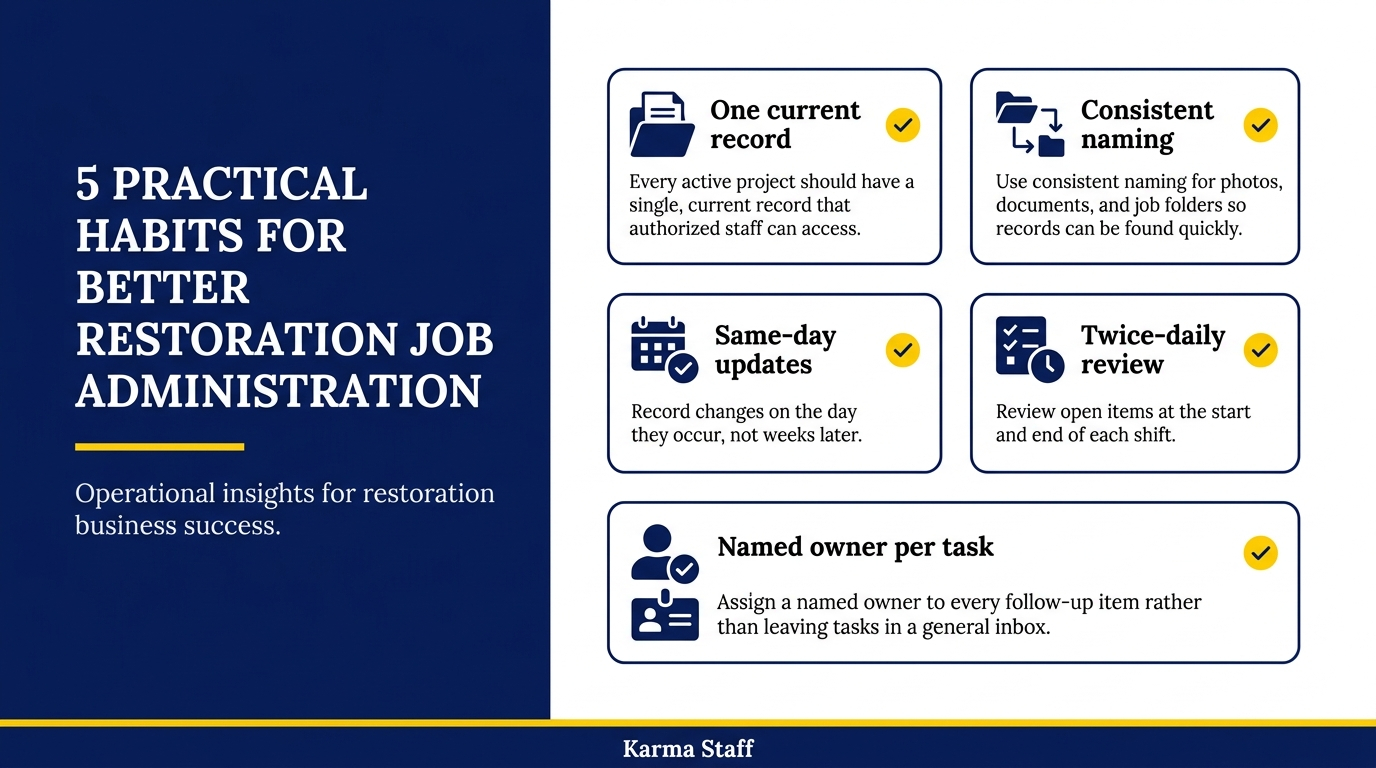
Effective job administration depends on repeatable habits rather than memory. Every active project should have a single, current record that authorized staff can access.
Use consistent naming for photos, documents, and job folders so records can be found quickly. Record changes on the day they occur. Review open items at the start and end of each shift. Assign a named owner to every follow-up item rather than leaving tasks in a general inbox.
If your restoration operation needs cleaner handoffs, faster documentation, and stronger billing records, build a clear on-site administrative process before the next emergency call arrives.
Conclusion
On-site administration gives restoration teams the structure needed to respond quickly without losing control of the details. It turns calls, photos, approvals, schedules, and costs into a usable job record that supports the entire project. Strong admin support in restoration helps crews stay productive, customers stay informed, and invoices reflect completed work accurately. The result is a more reliable operation from first notice of loss through final closeout.
FAQs
Q: What does a property restoration office admin do?
A: They coordinate job intake, documentation, communication, scheduling, authorizations, records, and billing support for active restoration projects.
Q: Can technicians handle restoration administration themselves?
A: Technicians should capture field details, but dedicated administrative support reduces interruptions and helps prevent missing documents, delayed updates, and billing errors.
Q: Why is documentation so important in restoration work?
A: Documentation supports work authorization, explains the scope, validates labor and equipment use, and provides the records needed for accurate invoicing and claim review.
related news & insights.

Running a virtual office sounds simple on the surface. No commute, fewer overheads, and teams spread across locations working digitally. But behind that flexibility sits a complex system of coordination, communication, and control that can easily break down without the right support. This is

The workplace has changed forever. Today, your most dependable team member might be thousands of miles away, and that’s often a good thing. With the rise of remote operations, businesses are realizing that effective administration doesn’t require a desk in the office. What matters