An estimator can be strong at pricing work and still be wrong for the job in front of them. The gap usually appears after a loss, when the office needs someone to turn incomplete field information into a claim-ready scope while conditions at the property are still changing. New construction and remodeling estimates have their own pressures, but they begin from a different set of assumptions. This article separates the two roles so you can decide which work belongs with which estimator.
TL;DR
– A restoration estimator scopes damage, documents conditions, and builds an estimate while mitigation and insurance questions are still moving.
– A construction estimator prices planned work from drawings, specifications, selections, and a defined build scope.
– Put emergency-loss files with a restoration estimator, even when reconstruction will follow later.
– Give a construction estimator work with settled plans, known materials, and a clear sequence of trades.
– Separate the mitigation estimate from the rebuild estimate when one file contains both kinds of work.
The Difference Is Not the Software but the Starting Point
A restoration estimator starts with a damaged property and works toward a supportable scope; a construction estimator starts with a planned scope and works toward a price. Both may use estimating software, read measurements, and organize labor and material costs. Those shared tools can make the roles look interchangeable from a distance.
The difference is the condition of the information. A construction estimate often works from a plan set, finish schedule, bid request, or defined renovation goal. The estimator can ask questions before work begins and can price alternatives before anyone commits to a direction.
A restoration file rarely arrives that cleanly. It may begin with photos, moisture readings, notes from a technician, a homeowner’s description, and a property that is still being dried or cleaned. The scope can change as materials are removed, hidden damage is found, or an insurer asks for more documentation.
That is why restoration vs construction estimator is not mainly a title choice. It is a decision about who can handle uncertainty, documentation, and the order in which a loss file develops.
Start With the Condition of the Property
Assign the file based on what the property needs now, not on what the finished project may eventually become. If water, fire residue, mold, or another source of damage still affects the building, the first estimating task is tied to restoration.
A restoration estimator needs to understand the work that makes a property stable and ready for the next decision. That can include documenting affected areas, identifying materials that may need removal, organizing drying or cleaning activity, and showing how the proposed work connects to the observed damage. The estimate has to make sense alongside the job file, not apart from it.
A construction estimator takes over more naturally once the job has a settled rebuilding direction. At that point, the questions shift toward replacement materials, trade sequencing, allowances, finishes, and how the planned work fits the owner’s goals.
The handoff is not always a single moment. A project can move from mitigation to reconstruction in stages, especially when damaged areas must be opened before the full rebuild scope is known. Keeping those stages distinct prevents an early emergency scope from being treated like a finished construction plan.
Read the Inputs Each Role Needs
The fastest way to see the difference is to look at the information each estimator needs before they can produce useful work. A construction estimator needs details that describe what will be built. A restoration estimator needs details that explain what happened, what was affected, and what has already been done.
For a restoration file, the estimator should be able to trace the scope back to the job record. Photos, field notes, room measurements, material observations, drying records, and communications about the loss all help build that connection. Missing information does not always stop the estimate, but it should be visible rather than guessed.
For a construction file, the estimator needs the version of the project that the customer is actually considering. Old drawings, incomplete selections, and unconfirmed allowances can create a precise-looking estimate for work nobody intends to perform.
A clean handoff to either role usually includes:
- A clear description of the work the estimator owns.
- The current photos, notes, measurements, and documents.
- One person who can answer scope questions promptly.
- A deadline that matches the file’s actual stage.
The estimator job roles in a restoration office often overlap at the software level, but they do not begin with the same evidence. Giving each role the right inputs matters more than asking either person to work faster.
Keep Emergency Documentation Separate From Rebuild Pricing
A restoration estimate should explain the response to damage before it tries to price every possible improvement. That boundary is where many files become difficult to manage.
After a loss, owners may want to discuss upgrades at the same time as necessary repair. They may choose a different flooring product, change a layout, or add work that was not caused by the event. Those are valid construction conversations, but they should not blur the original damage scope.
The restoration estimator’s work is to organize the damage-related scope in a way that the office, property owner, and insurer can follow. The construction estimator’s work is to price the selected rebuild path once choices are made. If the same person handles both, the file still needs those two modes of thinking.
This separation also helps the production team. Crews need to know which materials are affected, which areas are ready for rebuilding, and which choices remain open. A rebuild price cannot answer all of those questions by itself.
The practical rule is simple: document the loss first, then price the decisions that improve or change the property beyond that loss. A file becomes easier to explain when it does not ask one estimate to do both jobs at once.
Prevent the Handoff From Becoming a Bid Mismatch
The biggest failure is not choosing the wrong title; it is handing an estimator a file with an unclear purpose. A construction estimator may produce a thoughtful rebuild price that does not address the documentation a restoration file needs. A restoration estimator may preserve the damage record but lack the finalized details needed for a fixed construction proposal.
The office can avoid that mismatch by deciding what the estimate must accomplish before assigning it. Ask whether the document is meant to support mitigation work, explain a damage scope, request approval for rebuilding, compare owner choices, or establish an internal production budget. One file may need more than one of these, but each purpose should be named.
The handoff should also state what is still unknown. Unconfirmed cabinet selections, unopened wall cavities, missing measurements, and pending customer decisions are not small details. They change the kind of estimate the team can reasonably prepare.
This is especially important for remote estimator job roles. A remote hire can organize, draft, revise, and quality-check a file effectively when the office has a reliable way to send field evidence and answer questions. Without that system, the estimator spends time chasing context instead of building scope.
Choose the Role That Matches the Office Bottleneck
Choose a restoration estimator when the office is struggling to turn field activity into complete, readable, damage-related estimates. Choose a construction estimator when the work is planned, selections are moving, and the team needs reliable pricing for a defined build.
Some restoration companies need both capabilities but not both as separate full-time positions. An estimator may focus on mitigation and claim documentation while another team member handles reconstruction pricing. In a smaller office, one person may cover both functions, provided the workflow makes the switch between them explicit.
The role choice should follow the work that repeatedly delays jobs. If technicians finish site work but estimates wait on documentation, the bottleneck is likely on the restoration side. If approved jobs sit while the team resolves allowances, materials, and trade scope, the construction side may need more attention.
Do not hire around a vague title. Write down the files, decisions, software tasks, communication duties, and quality checks the role will own. That description will tell you more than a job title ever can.
Restoration Estimating and Construction Estimating Compared
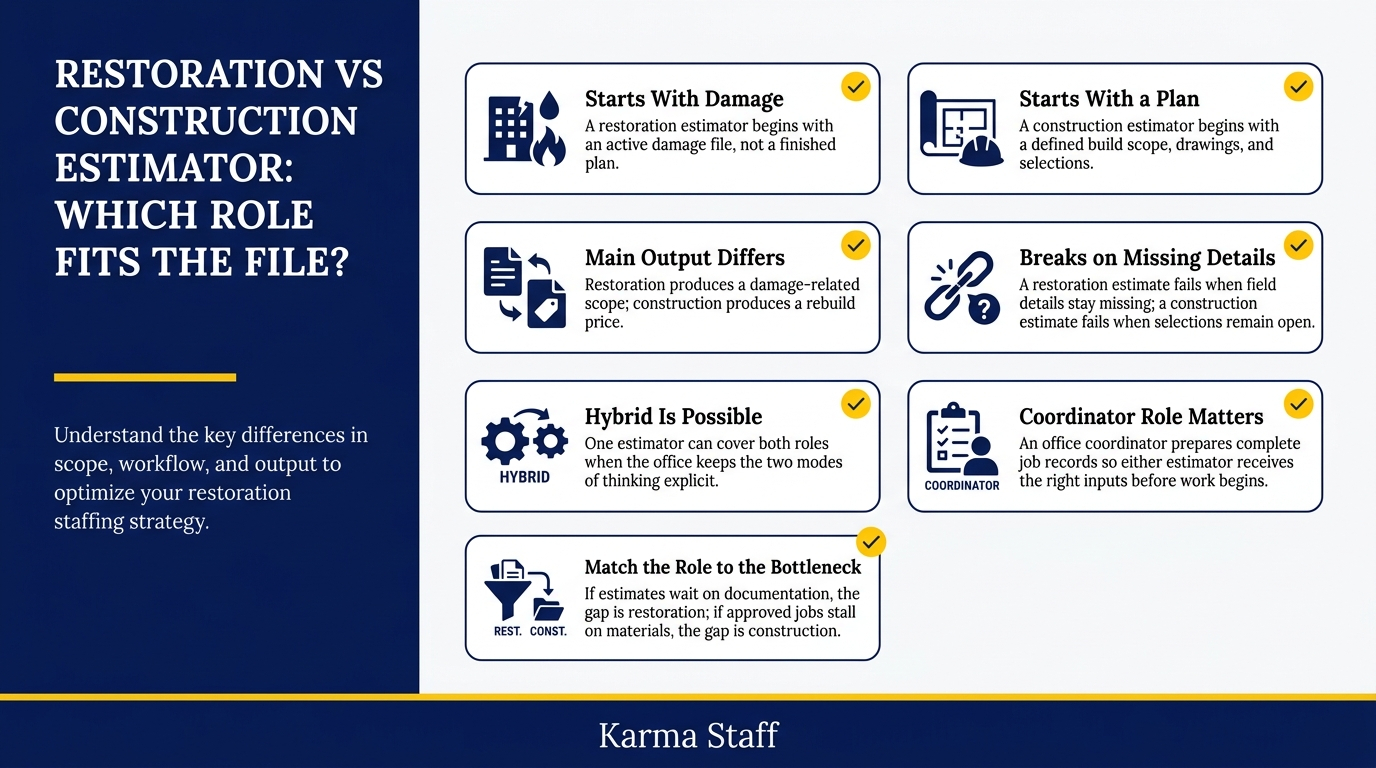
| Option | Starts With | Main Output | Breaks When |
| Restoration estimator | Active damage file | Damage-related scope | Field details stay missing |
| Construction estimator | Defined build plan | Rebuild price | Selections remain open |
| One hybrid estimator | Clear role boundaries | Separate estimate types | Both tasks blend together |
| Office coordinator | Complete job records | Ready estimator handoff | Documentation arrives late |
Where the Roles Can Overlap
The roles can overlap after the property is stable and the damage scope is clear enough to support rebuilding choices. A restoration estimator may understand the property history better than anyone else on the file, which can make that person valuable during the transition to reconstruction. A construction estimator may also spot buildability questions that affect the final scope.
Overlap works when the office keeps the purpose of each estimate visible. It breaks down when everyone assumes the other person is tracking the missing details. The estimator should not be left to decide whether an unconfirmed finish is an insurance item, an owner upgrade, or a placeholder.
For a small, straightforward repair, one capable estimator may handle the file from first documentation through rebuild pricing. For a large loss, a complex commercial project, or a file with many changing decisions, separating the responsibilities usually creates a cleaner record and fewer avoidable revisions.
Final Verdict
If the work begins with property damage, changing conditions, and a need to connect field evidence to a scope, assign it to a restoration estimator first. If the damage has been addressed and the remaining question is what to build, specify, and price, a construction estimator is the closer fit. The distinction matters most when a file moves from emergency work into reconstruction.
For offices comparing restoration vs construction estimator needs, start with the files that sit longest and identify the missing decision behind each delay. Clear estimator job roles make it easier to define the handoff, protect quality, and decide whether one person can cover both functions.
FAQs
Q: Can one estimator handle restoration and construction work?
A: Yes, one estimator can cover both types of work when the office makes the shift in responsibility clear. The person needs to know whether they are documenting damage-related work, pricing a defined rebuild, or preparing both as separate parts of the file. The risk is not the combined role itself; it is an unclear scope.
Q: Is a restoration estimator only needed for insurance claims?
A: No. A restoration estimator’s work centers on organizing damage-related scope and the records behind it. An insurance claim may be part of the file, but the estimating need begins with the property condition and the work required to address it. The owner may also need a clear scope for internal planning or repair decisions.
Q: What should a restoration office give an estimator before assigning a file?
A: Give the estimator the current job information, including field notes, photos, measurements, work already completed, and the purpose of the estimate. The assignment should also name the person who can answer questions about the site. A clear handoff reduces revisions caused by missing context.
Q: When should reconstruction pricing begin after a loss?
A: Reconstruction pricing should begin when the team has enough information to describe the intended rebuild without treating open questions as settled facts. Some pricing can start early for planning, but the office should mark pending choices and unknown conditions clearly. Final pricing is stronger when materials, scope boundaries, and customer decisions are defined.
Q: What is the main difference between estimator job roles in a restoration company?
A: The main difference is the decision each role supports. A restoration-focused estimator helps the office explain and organize work tied to damage. A construction-focused estimator helps price planned rebuilding work. In some companies, a coordinator prepares the job record so either estimator receives complete information before estimating begins.
related news & insights.

Introduction Water, fire, mold, or storm damage can turn a manageable repair into a long disruption when work begins without a clear plan. Fast action matters, but speed without coordination often creates avoidable delays later. A detailed plan gives every trade, supplier, insurer, and property
-
A project budget can look realistic on paper and still fail once work begins. Missing quantities, outdated material prices, unclear scopes, and unplanned site conditions often create expenses that were not included in the original figure. An estimator helps turn incomplete project information into a