
Introduction
Water, fire, mold, or storm damage can turn a manageable repair into a long disruption when work begins without a clear plan. Fast action matters, but speed without coordination often creates avoidable delays later.
A detailed plan gives every trade, supplier, insurer, and property owner the same direction before major work starts. It also clarifies when to hire estimator support, especially when damage is concealed, multiple trades are involved, or insurance documentation will affect approvals. Good planning does not slow a project down. It removes the questions, gaps, and rework that consume time after demolition begins.
The Real Source Of Restoration Delays
Most restoration delays do not come from workers moving slowly. They come from incomplete information reaching the job site too late. A crew may open a wall and find damaged framing, outdated wiring, or wet insulation that was not included in the original scope. The work stops while someone decides what to do, prices the added work, and seeks approval.
Material availability can create another bottleneck. If flooring, cabinetry, drywall, or specialty trim is selected after demolition, the project may wait weeks for items that should have been ordered earlier. A plan identifies long lead materials before crews reach the installation stage.
Approval delays are also common. Insurers, property managers, lenders, and owners may each need different documentation. A well-prepared file includes photos, measurements, moisture records, repair specifications, and a clear cost breakdown. That preparation shortens review cycles and reduces back-and-forth questions.
A Faster Path From Scope To Start
A restoration plan converts visible damage and hidden risks into an ordered sequence of work. Instead of scheduling trades based on assumptions, the project team can assign tasks according to what must happen first.
For example, drying must be completed and documented before insulation and drywall installation. Electrical repairs may need to occur before walls close. Flooring measurements should happen after subfloors are stable and moisture readings are acceptable. Planning those dependencies prevents one contractor from undoing another contractor’s work.
The plan should also distinguish emergency stabilization from permanent repairs. Emergency services may include water extraction, roof tarping, boarding up, dehumidification, and debris removal. Permanent work can include structural repairs, plumbing replacement, drywall, paint, flooring, and finish carpentry. Treating these phases separately makes it easier to approve urgent work while preparing an accurate reconstruction schedule.
When To Hire An Estimator During Planning
An estimator is most useful before the scope becomes fixed, not after a contractor has already started ordering materials. Early estimating reveals whether the proposed repairs match the actual condition of the property and whether the available budget supports the intended finish level.
Property owners should consider estimator involvement as soon as the initial emergency work is complete and the damaged areas are accessible. At that point, measurements can be verified, materials can be identified, and hidden damage can be flagged for further inspection. Waiting until repairs are underway increases the chance of change orders because early assumptions have already shaped the schedule.
An estimator can also help separate repair costs from upgrades. Replacing damaged laminate with similar laminate is a repair decision. Choosing hardwood instead may be an owner-funded upgrade. Defining that difference early prevents disputes about responsibility, allowances, and approval timing.
On larger jobs, an estimator creates a detailed line-item scope that contractors, adjusters, and owners can compare. This reduces confusion caused by broad descriptions such as “repair bathroom” or “restore kitchen.” Specificity matters. The scope should identify demolition, drying, framing, electrical, plumbing, insulation, wall finishes, flooring, fixtures, cleanup, and permit-related work where applicable.
How Estimating Changes The Schedule
A reliable estimate is more than a price. It is a planning document that exposes the labor, materials, and sequencing required to complete the work. Each line item gives the project manager a clearer view of what must be purchased, approved, scheduled, and inspected.
Labor estimates help determine whether a trade needs one day or several days on site. Material quantities show whether stock items are sufficient or custom orders are needed. Allowances identify areas where a selection still needs a final decision. These details allow the team to schedule with realistic dates rather than optimistic guesses.
Estimating also helps avoid idle crews. If a painter is booked before drywall repairs, texture matching, and primer curing are complete, the painter may need to leave and return later. That creates gaps in the schedule and can raise labor costs. A coordinated estimate supports trade sequencing that keeps work moving without unnecessary interruptions.
Project Checks Before Work Begins
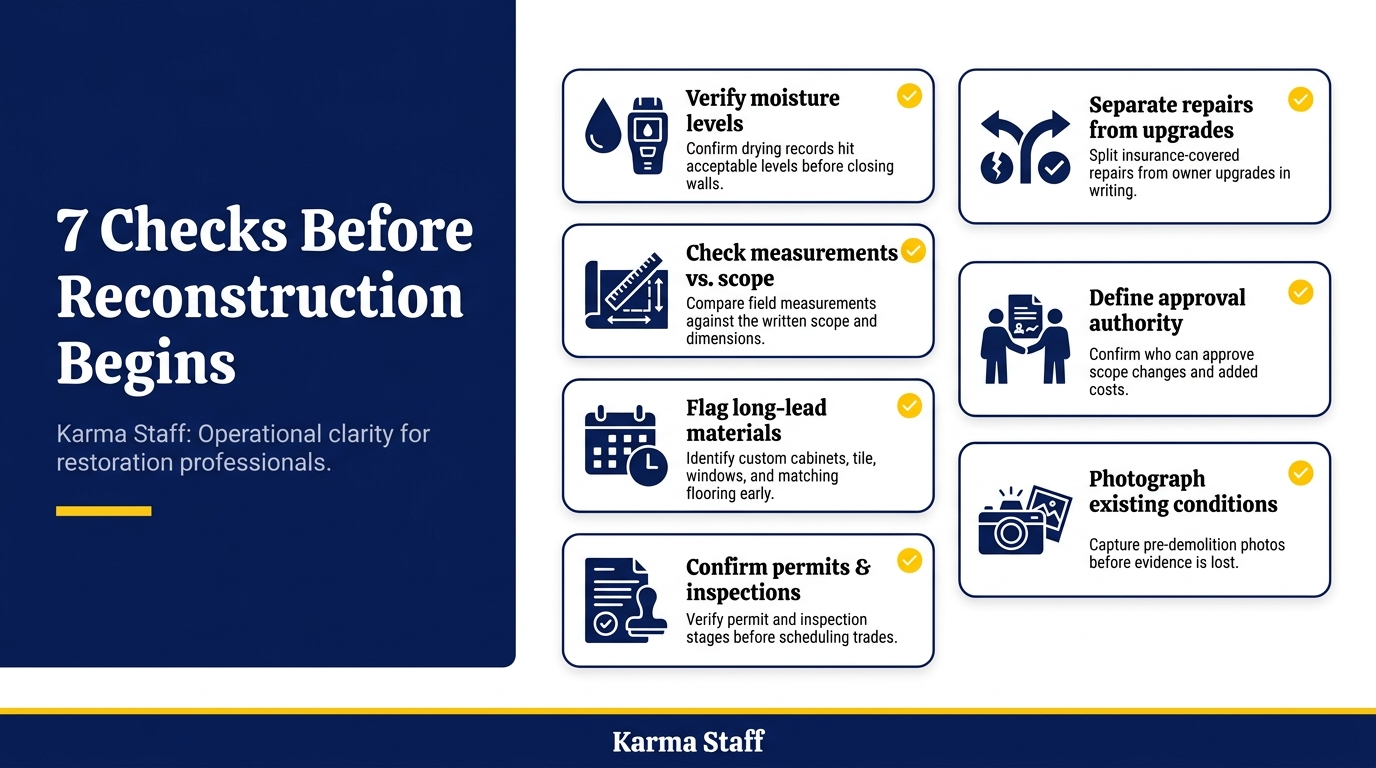
A short review before reconstruction starts can prevent weeks of avoidable schedule changes.
– Confirm drying records show materials are at acceptable moisture levels before closing walls or installing finishes.
– Compare field measurements with the written scope, including room dimensions, ceiling heights, and damaged areas.
– Identify materials with long lead times, such as custom cabinets, specialty tile, windows, and matching flooring.
– Verify permit requirements and inspection stages before scheduling structural, electrical, plumbing, or mechanical work.
– Separate insurance-covered repairs from owner-requested upgrades in writing.
– Confirm who can approve scope changes, material substitutions, and added costs.
– Photographing existing conditions before demolition removes evidence of the original damage.
These checks create a dependable starting point for the reconstruction schedule.
Communication That Keeps Trades Moving
A plan only saves time if the right people can use it. Each contractor should receive the current scope, schedule, site access details, material selections, and contact information before arriving. Sending a vague text message the night before work starts is rarely enough for complex repairs.
One person should maintain the master schedule and record approved changes. This avoids the common problem of a plumber receiving one instruction from the owner while the drywall contractor follows a different version from the project manager. A simple shared document can track milestones, pending decisions, deliveries, inspections, and open issues.
Daily site updates are especially valuable during active reconstruction. A brief update should state what was completed, what is planned next, what decision is needed, and whether any condition could affect the schedule. This format helps owners and insurers respond before a small issue stops the next trade.
Common Planning Mistakes That Create Rework
Even experienced teams lose time when early decisions are based on incomplete details.
– Starting reconstruction before moisture verification can trap moisture behind new finishes and require removal later.
– Ordering replacement materials without checking availability can leave completed areas waiting for one missing item.
– Using broad-scope language creates different expectations among contractors, adjusters, and property owners.
– Scheduling trades without accounting for inspections, cure times, or material delivery dates causes missed appointments.
– Approving upgrades verbally makes it harder to track added cost and revised completion dates.
– Ignoring concealed damage allowances leaves no process for handling conditions found after demolition.
– Failing to document preexisting conditions can lead to disagreements about what damage was part of the event.
Avoiding these mistakes keeps the project focused on completion rather than correction.
Turning The Plan Into Daily Control
The most effective restoration plans are updated as the property reveals new information. Demolition may uncover rot, damaged subflooring, code issues, or previous repairs that affect the original scope. These findings should be documented immediately with photos, measurements, a written explanation, cost impact, and schedule impact.
Do not treat every change as a crisis. A clear change process allows the team to evaluate the condition, obtain approval, order needed materials, and resequence nearby work. For instance, if framing repairs delay drywall, the team may move ahead with cabinet selection, fixture procurement, or work in an unaffected room.
The goal is not to create a rigid schedule that cannot change. The goal is to make each change visible early enough that the team can respond without stopping the entire project.
Conclusion
Time is saved before the first reconstruction crew arrives. Clear scopes, verified conditions, material planning, and defined approvals allow trades to work in the right order with fewer interruptions.
Strong restoration project planning also gives owners a practical way to monitor progress, approve decisions quickly, and identify risks before they become major delays. Review the scope, schedule, and outstanding decisions before authorizing reconstruction so every participant begins with the same expectations.
FAQs
Q: How early should a restoration project plan be created?
A: Create the plan after emergency stabilization and initial drying, once damaged areas can be safely inspected. Update it after demolition if concealed conditions are found.
Q: Can planning reduce insurance approval delays?
A: Yes. Detailed photos, measurements, moisture documentation, itemized estimates, and a clear repair scope give adjusters the information needed to review the claim more efficiently.
Q: What should be included in a restoration schedule?
A: Include demolition, drying verification, permits, inspections, material ordering, trade sequencing, cure times, cleanup, final walkthrough, and any decisions that require owner or insurer approval.
related news & insights.

A project budget can look realistic on paper and still fail once work begins. Missing quantities, outdated material prices, unclear scopes, and unplanned site conditions often create expenses that were not included in the original figure. An estimator helps turn incomplete project information into a
-
A property damage claim estimate is more than a list of repairs and prices. It sets the scope of work, identifies hidden damage, applies local labor costs, and can shape how much funding is available to restore the property correctly. A missed line item