
A project budget can look realistic on paper and still fail once work begins. Missing quantities, outdated material prices, unclear scopes, and unplanned site conditions often create expenses that were not included in the original figure. An estimator helps turn incomplete project information into a usable financial plan. Their work is not limited to adding up materials and labor. They review drawings, define the scope, test assumptions, compare supplier pricing, and identify cost exposure before contracts are signed. The strongest property estimator benefits come from preventing expensive decisions rather than reacting to them after money has already been committed.
For property owners, developers, and contractors, an accurate estimate creates a clearer path from initial idea to completed work. It shows where the budget is firm, where it is vulnerable, and which choices will have the largest financial effect.
The Estimator’s Role Before Work Begins
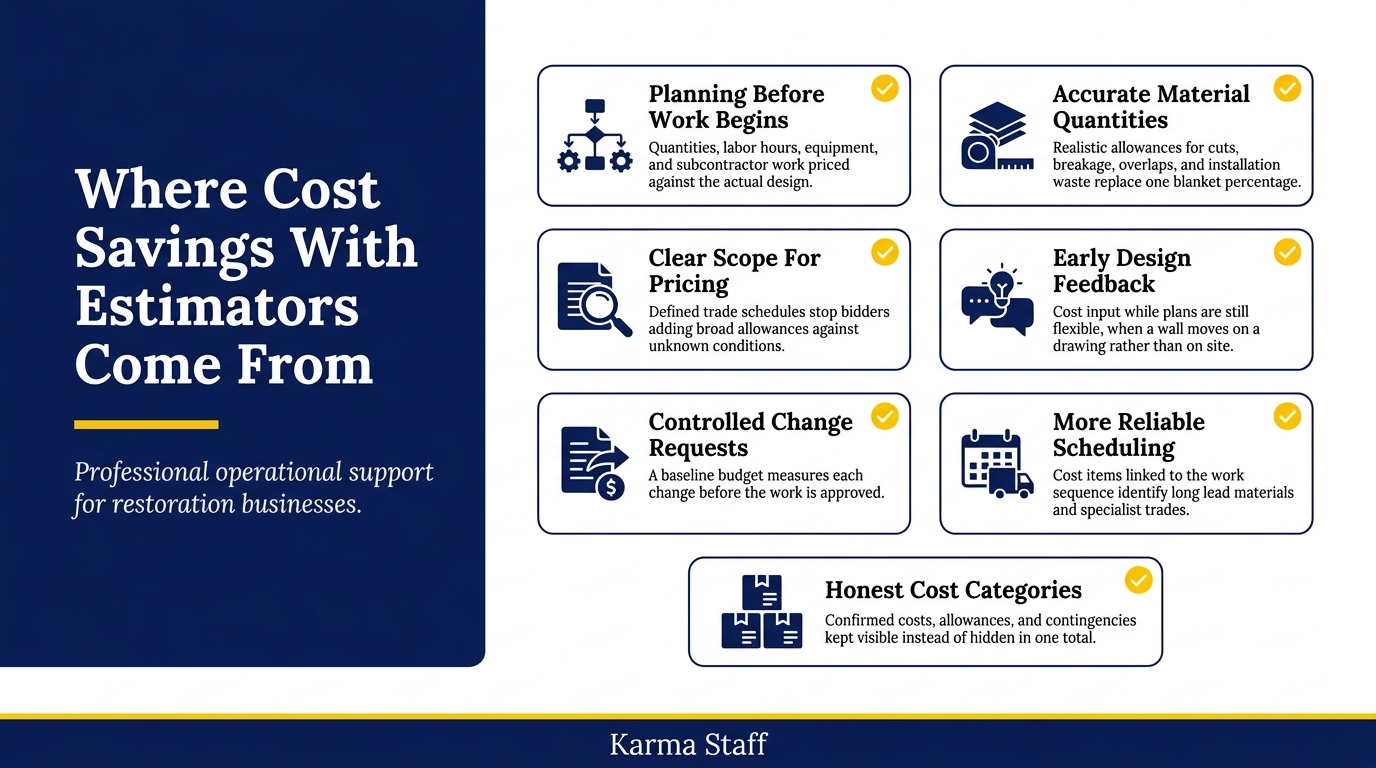
Estimators create a detailed picture of what the project requires before crews arrive on site. They measure quantities from plans, allocate labor hours, price equipment, and account for subcontractor work. This process replaces broad allowances with figures tied to the actual design.
For example, a renovation estimate may separate demolition, structural changes, plumbing relocations, finishes, permits, and waste removal. Without that separation, a contractor may quote a single lump sum that hides whether the budget can support the desired finishes or layout changes.
A well-prepared estimate also documents assumptions. If the price assumes clear site access, standard soil conditions, or client-supplied fixtures, those details are visible early. The owner can then confirm them, change the plan, or allow funds for a different outcome.
Accurate Quantities Protect Material Budgets
Material waste is one of the most common sources of avoidable overspend. Ordering too little delays work and can lead to rushed purchases at higher prices. Ordering too much ties up cash and leaves the project with surplus stock that may not be returnable.
An estimator uses drawings and specifications to calculate quantities for concrete, timber, flooring, roofing, insulation, fixtures, and other items. They can also apply realistic allowances for cuts, breakage, overlaps, and installation waste. These allowances vary by material and should not be guessed with one blanket percentage.
Accurate quantities also help buyers compare supplier quotations on a like-for-like basis. A lower unit price does not create a saving if the supplier has excluded delivery, tax, fasteners, or essential accessories. The estimate identifies the full material requirement before purchase orders are issued.
Better Pricing Comes From Clear Scope
Suppliers and subcontractors price more accurately when they receive a clear scope of work. Vague requests produce broad allowances because bidders must protect themselves against unknown conditions. Those allowances increase the price even if the extra work never occurs.
An estimator prepares schedules that define what each trade must include. A painting package, for instance, can specify surface preparation, primer, number of coats, access equipment, protection of adjacent finishes, and cleaning. This level of detail reduces the risk that a low quote excludes necessary work.
Clear scope documents also make quote comparisons more meaningful. If one electrician includes a consumer unit upgrade and another does not, the estimator can identify the difference before selection. Choosing the cheapest headline number without this review often creates a larger final bill.
Early Design Decisions Have Financial Consequences
The cheapest time to solve a cost problem is during design. Moving a wall on a drawing is simple. Moving it after framing, wiring, plumbing, and finishes are installed can affect several trades and extend the schedule.
Estimators provide cost feedback while plans are still flexible. They can show how a larger extension changes foundation quantities, roof structure, heating requirements, and external finishes. They can also price alternatives, such as engineered timber versus steel, standard tiles versus large-format tiles, or a simpler drainage layout.
This information allows decision-makers to protect the features that matter most. Instead of cutting costs randomly near the end of the project, they can choose targeted changes that deliver the required function within the available budget.
Change Control Stops Small Requests From Growing
Many project overruns begin with changes that appear minor. A different door style, extra sockets, upgraded worktops, or a revised bathroom layout may each seem manageable. Together, they can exceed the contingency fund.
An estimator establishes a baseline budget that records the agreed scope and pricing. When a change is requested, it can be measured against that baseline. The team can see the direct cost, related labor, procurement impact, and likely schedule effect before approving the work.
This process gives owners control over choices. They can approve the upgrade, select a lower-cost alternative, defer it, or remove another item to keep spending balanced. Decisions are based on current numbers rather than assumptions.
Estimating Supports More Reliable Scheduling
Time has a direct cost to most property projects. Extended labor, equipment hire, site security, temporary utilities, financing, and management costs can all increase when work takes longer than planned.
A detailed estimate links cost items to the sequence of work. This helps project teams identify long lead materials, specialist trades, and activities that must happen before other work can start. Ordering windows becomes clearer, reducing the chance of crews waiting for materials or access.
Estimating also helps assess whether a proposed program is realistic. If the labor hours required for plastering, tiling, or landscaping do not fit the planned duration, the schedule can be adjusted before it creates pressure on site.
The Value Depends On Information Quality
An estimate is only as reliable as the information available. Incomplete drawings, missing specifications, and uncertain site conditions create gaps that must be managed openly. A responsible estimator does not hide those gaps inside a single unexplained total. The best estimates separate confirmed costs from allowances and contingencies. Confirmed costs are based on defined quantities and current quotations. Allowances cover selections that have not yet been finalized. Contingencies address reasonable unknowns, such as concealed defects in an older building.
Owners should review these categories before treating the estimate as a final commitment. This creates a more honest budget and reduces surprise costs later. It also shows which decisions need attention before construction can proceed with confidence.
Conclusion
Savings are created through better decisions made before costs become fixed. Cost savings with estimators result from accurate quantities, comparable quotes, clearer scope, controlled changes, and timely design feedback.
The most useful estimate is not simply the lowest number. It is a transparent working document that explains what is included, what is uncertain, and what will affect the final spend. Ask an estimator for a detailed cost breakdown before approving designs, selecting contractors, or ordering major materials.
FAQs
Q: Can an estimator help with a small renovation project?
A: Yes. Smaller projects can still face costly errors in quantities, trade scope, and finish selections. An estimator can focus on the highest-value items, such as structural work, kitchens, bathrooms, roofing, and mechanical services.
Q: Is an estimate the same as a contractor quote?
A: No. An estimate is an independent calculation of likely project costs based on scope and quantities. A contractor quote is a price offered by a specific contractor to complete the work, often using their own methods, suppliers, and exclusions.
Q: When should an estimator be involved?
A: Involve an estimator during early design and update the estimate before tendering or construction. Early involvement gives the team time to adjust the design before changes become expensive.
related news & insights.

A property damage claim estimate is more than a list of repairs and prices. It sets the scope of work, identifies hidden damage, applies local labor costs, and can shape how much funding is available to restore the property correctly. A missed line item

Insurance restoration projects often stall before they even begin, not because of a lack of damage, but because the estimate fails to pass review. Contractors, adjusters, and property owners all feel the impact when an estimate is rejected or delayed. Payments get held up,